

Wi-Fi for 70,000 Fans at Once: The Engineering Behind Stadium Connectivity at the 2026 World Cup
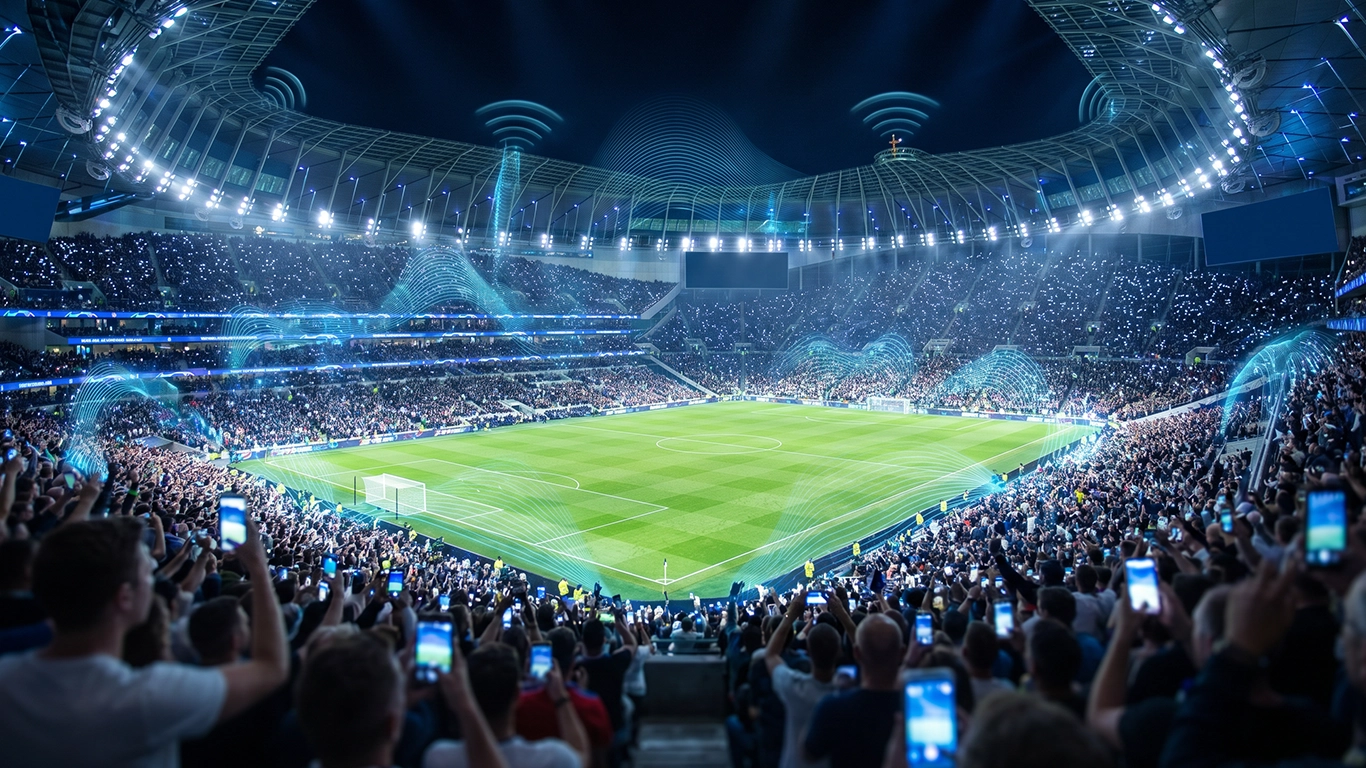
A few years ago, offering Wi-Fi connectivity inside a stadium felt like an add-on, even an unnecessary expense. Today the reality is very different: it has become a basic service for both fans and venue management alike, and a necessary investment. More and more attendees expect to share content in real time, check live stats, make digital payments, access event-specific platforms and apps, and stay fully connected throughout the experience.
Within this context, it’s important to understand that designing a network capable of supporting seventy thousand concurrent users is nothing like deploying Wi-Fi in an office, a shopping mall, or any venue with a smaller user base. A modern stadium means a far more complex wireless environment, with thousands of devices attempting to transmit data simultaneously from the same physical space, often during specific moments of peak demand.
For this reason, designing stadium networks has become a specialized engineering discipline involving radiofrequency specialists, network architects, security experts, automation engineers, and data analytics professionals.
At JT Tech Global, we understand that connectivity infrastructure for stadiums goes far beyond simply providing internet access. It’s specialized work focused on building a technology platform that elevates the fan experience, optimizes operations, and creates new revenue opportunities for the venue.
Step One: Understanding the Behavior of 70,000 Users
A thorough analysis of user behavior is essential from the outset. A common early mistake is simply installing access points without first answering the right questions. Engineers need to determine:
- How many people will actually be using Wi-Fi simultaneously?
- What percentage of traffic will be video?
- Which stadium services will run on the same infrastructure?
- How many users will log into official apps?
Inside a stadium or venue, the network supports not only fans but also digital screens, ticketing systems, points of sale, medical equipment, audiovisual production, IoT and automation systems, access control, surveillance cameras, press operations, and security personnel.
It isn’t simply about connecting 70,000 people at once — the required capacity is usually several times higher. The most successful projects are the ones built on a detailed analysis of each user type an
Extreme Density Is Now the Real Challenge
In an office, a single access point can support dozens of users connecting simultaneously across a fairly wide area. In a stadium, the scenario is completely different: thousands of devices can concentrate in a single seating section, causing constant interference and competition for the same radio spectrum.
Stadium Wi-Fi engineering follows one key principle: it’s about capacity, not coverage.
A network can have perfect signal strength in every corner of the stadium and still fail, simply because it lacks the capacity to connect a large volume of people at the same time.
Where Are Access Points Installed?
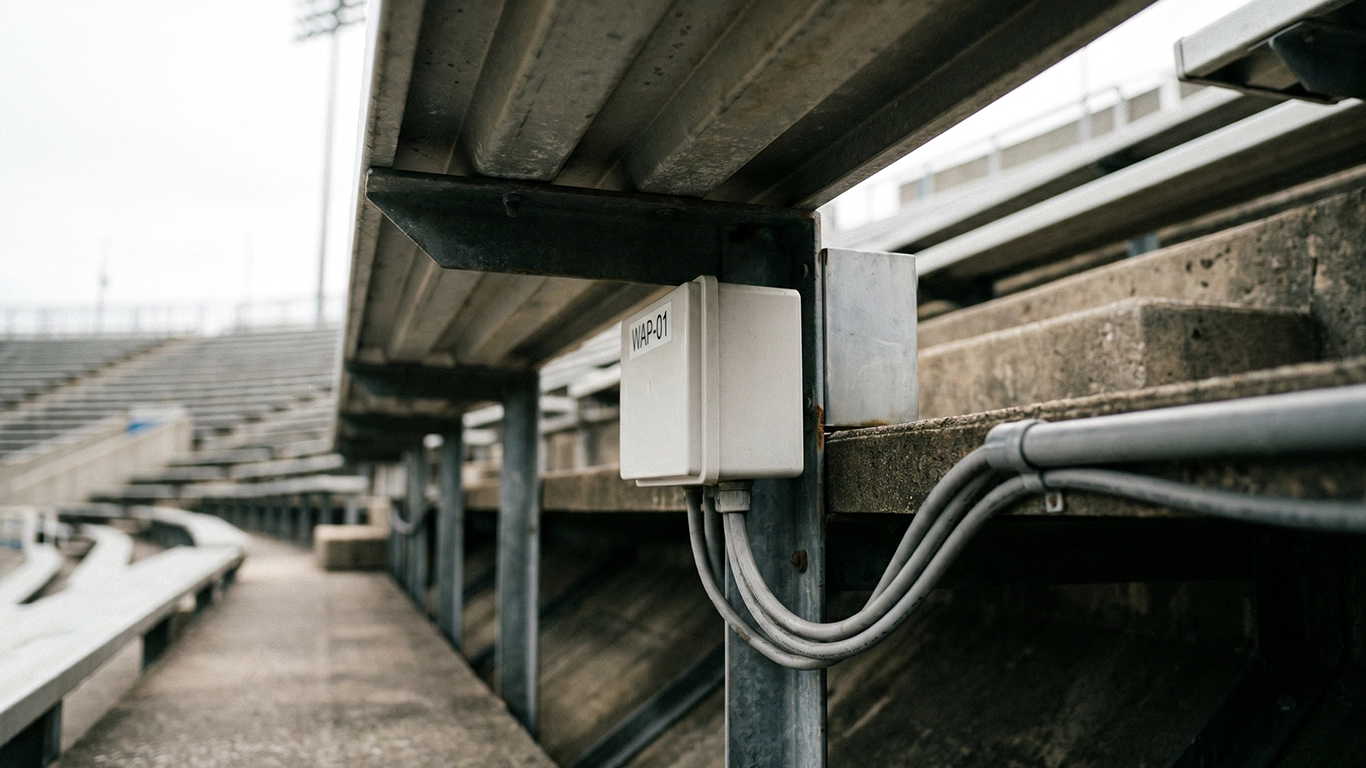
Access point placement might seem like a simple, even obvious decision, but it’s a science in its own right. Today, several different approaches are used.
Overhead structures: Antennas mounted on roofs, catwalks, and elevated structures are typically used to cover specific zones.
Handrails and walkways: Known as “in-rail deployment,” this approach creates smaller, tightly controlled wireless cells designed to support extreme user densities.
Under-seat deployment: Access points are placed beneath the seats so the signal stays closer to the user and interference is reduced. This approach allows for more efficient frequency use and a significant increase in total network capacity.
Which technique (or combination of techniques) is used depends on architectural factors, expected capacity, available budget, and sometimes the venue’s aesthetics. That’s why every stadium requires a fully customized analysis and design.
A Little-Known but Critical Part of the Industry
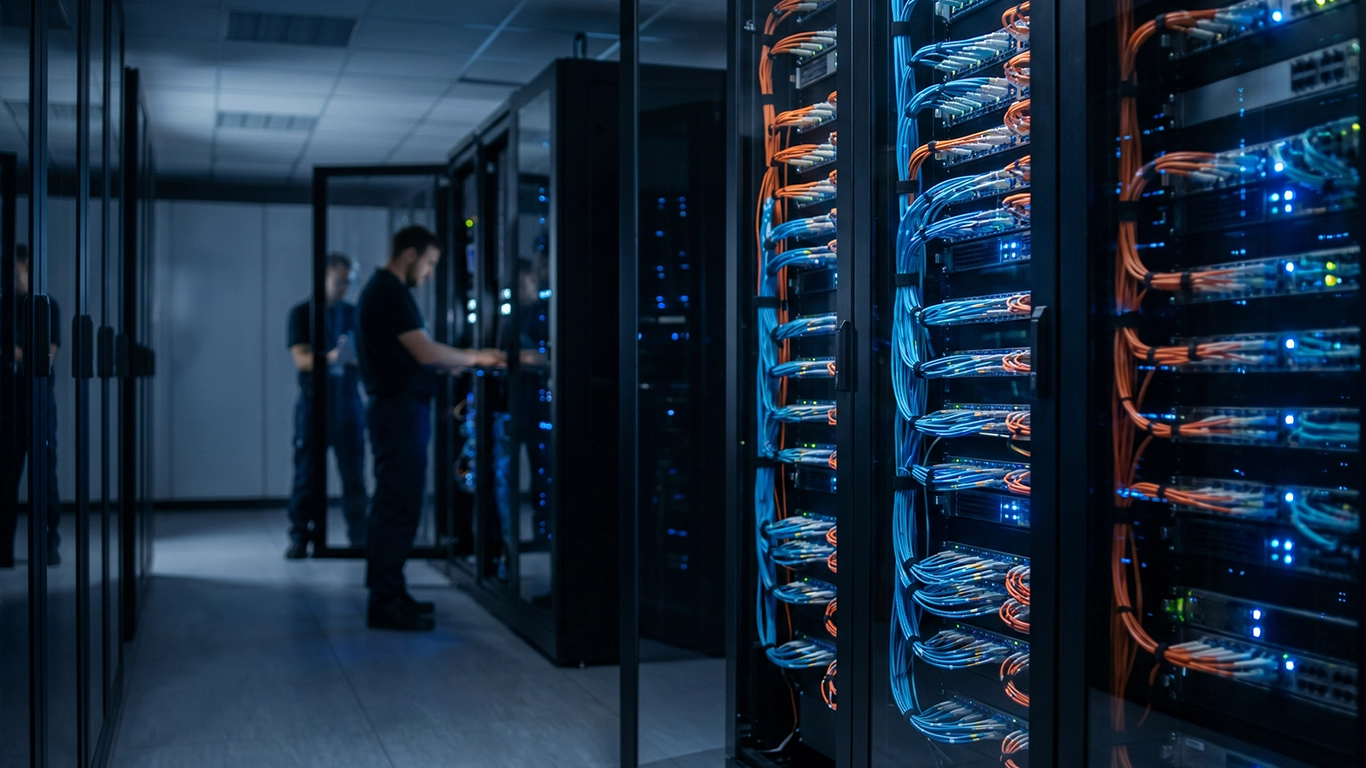
There’s an invisible element that holds the entire backbone together — Wi-Fi is really only one part of the project. Behind it sits a complex wired network infrastructure responsible for moving enormous volumes of data in real time.
If that backbone fails, the Wi-Fi fails with it. For this reason, modern stadiums require redundant fiber-optic networks, resilient architectures, intelligent load balancing, high-capacity switching, and advanced traffic segmentation.
Next-generation solutions are built not only to handle current demand but also to anticipate the venue’s future growth.
At JT Tech Global, stadium connectivity design covers both the wireless layer and the switching and transport infrastructure that guarantees consistent performance during any event.
Security as a Non-Negotiable Requirement
In a stadium where thousands of people connect simultaneously from unknown devices, security is a fundamental part of the design. Enterprise-grade deployments typically include:
- Security policies
- Role-based access control
- Daily monitoring of connected devices
- Dynamic user segmentation
- Real-time threat detection
Security can’t be bolted on as an extra service — it has to be part of the architecture from day one.
The Future of Connected Stadiums Is Already Here
As technology and internet services continue to advance, and as users increasingly expect to stay connected at all times — even in massive venues like stadiums — these spaces must now support virtually every kind of digital experience.
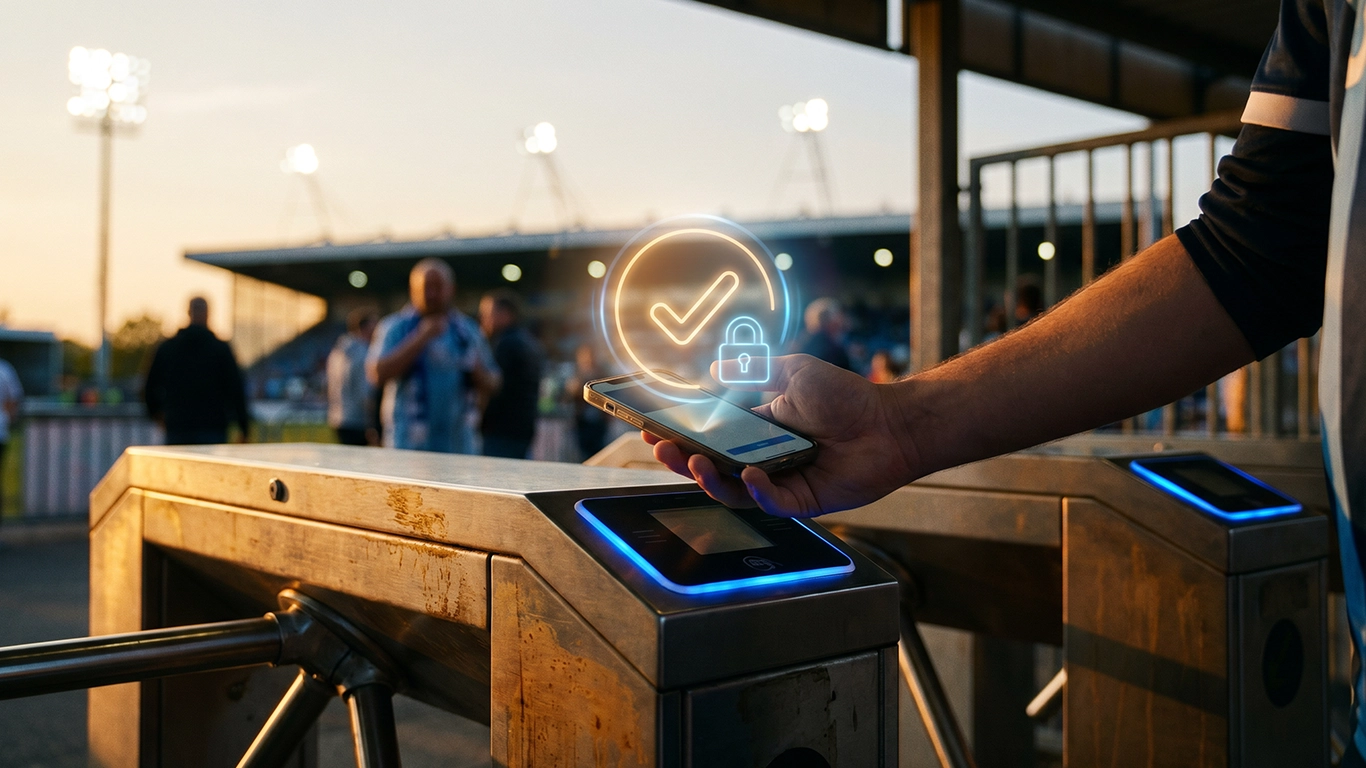
Online payments, real-time analytics, content publishing across digital channels, and integrated services all depend on robust, scalable infrastructure.
The vision is to treat Wi-Fi as a strategic investment, one that directly impacts fan satisfaction, service delivery, operational efficiency, and revenue generation.
At JT Tech Global, this vision is part of the DNA of every project. With extensive experience in enterprise network design, high-density and sports-venue solutions, centralized management, scalable architectures, and advanced analytics, we help transform venues and arenas into digital platforms ready for today’s and tomorrow’s challenges.
Por JT Tech
IT Solutions – WiFi
Related Resources

Transforming Sports & Public Venues: Connectivity to Actionable Insights
When attending a game or event, guests expect a fast and stable mobile experience. This baseline goal has grown and evolved substantially, as more customer-facing and back-of-house assets are digitized in venue environments, relying on critical IT network solutions...

ArcelorMittal Improves IT Performance and Reliability Across Three European Corporate Hubs
ArcelorMittal is the world's leading steel and mining company with a presence in 60 countries and an industrial footprint in 19 countries worldwide. It employs over 4,000 staff, 800 of whom are based in its head office in Luxembourg. It employs over 4,000 staff, 800...

MSK Group is Ready for Tomorrow With Modernized Network
MSK Group is a family-owned business based in Ylihärmä, Finland. For more than 70 years, it has been manufacturing high-quality plastic components, mobile machinery, and smart cabins for a range of industries, including construction, mining, agriculture, forestry, and...

Digital Transformation Efforts Powered by Network Automation, Simplicity, Security, and Intelligence
ŠKODA AUTO, based in Mladá Boleslav, is a leading industrial enterprise in the Czech Republic and one of the oldest carmakers in the world. Today, ŠKODA AUTO employs over 30,000 people, operating as part of the Volkswagen Group for nearly 30 years. In recent years,...

Streamlining the Kraft Group’s Manufacturing Operations
The Kraft Group is a privately held holding company headquartered in Massachusetts. It is the holding company for several subsidiaries operating in various sectors, including manufacturing and sports. Extreme Networks has partnered with the Kraft Group for over a...

Extreme Networks meets Major League Baseball™ at the intersection of Cloud, Mobility, and Analytics.
From the concourse to the dugouts and beyond — Extreme Networks is coming to a ballpark near you.CLOUD-SPEED Baseball and technology require agilityand flexibility without losing functionality. MOBILITY Mobile and IoT Devices are integral toplayer and fan experience....

Seattle Seahawks Achieve Operational Freedom with Cloud-Managed Wi-Fi
Lumen Field is a world-class football/soccer stadium and exhibition center, home to the Seattle Seahawks. The 325,000 sq. ft. complex seats 70,000+ and hosts a wide variety and volume of events each year from trade shows, corporate events, concerts, and more, making...

MLB All-Star Week Drives Record Wi-Fi Fan Engagement
MORRISVILLE, N.C.--(BUSINESS WIRE)--Jul. 18, 2023-- Extreme Networks™, Inc .(Nasdaq: EXTR), a leader in cloud networking, today announced that the recent MLB All-Star Week in Seattle, which ran fully on Extreme wireless solutions, drove record fan Wi-Fi engagement...

Baylor Outfits New Stadium with Professional Grade Wi-Fi for an Interactive Fan Experience
McLane Stadium is the home football stadium of Baylor University, a private higher education institution located in Waco, Texas. Devoted to delivering an exceptional gameday experience to its fans, in the fall of 2012 Baylor University embarked on a $260 million...

Always On” High-Density Wi-Fi and Analytics for Stadiums and Arenas
Fans everywhere want to share their sports experience and excitement with other fans in the stadium, their friends and family at home, and their social networks, providing reliable, wireless internet access was crucial to delivering a world-class fan...