

Network Observability as a Strategic Pillar for Business Continuity and the Role of AI
Network Observability as a Strategic Pillar for Business Continuity and the Role of AI
In today’s increasingly digital business environment, corporate networks have become one of the most critical strategic assets for organizations. What was once considered a highly technical and almost “invisible” layer is now fundamental to digital operations, online users, business processes, and complex multicloud ecosystems—all of which depend on stable, secure, and predictable connectivity.
Despite recognizing its importance, many organizations in the United States still manage their networks with a reactive mindset—addressing issues only after failures occur. In this context, network observability represents a shift in thinking for executive leadership: moving away from firefighting toward anticipating risks, improving performance, and protecting operational continuity.
This article explores why network observability is a key strategic decision within reach of executive leadership, and how adopting it can significantly improve business outcomes by increasing efficiency and organizational resilience.
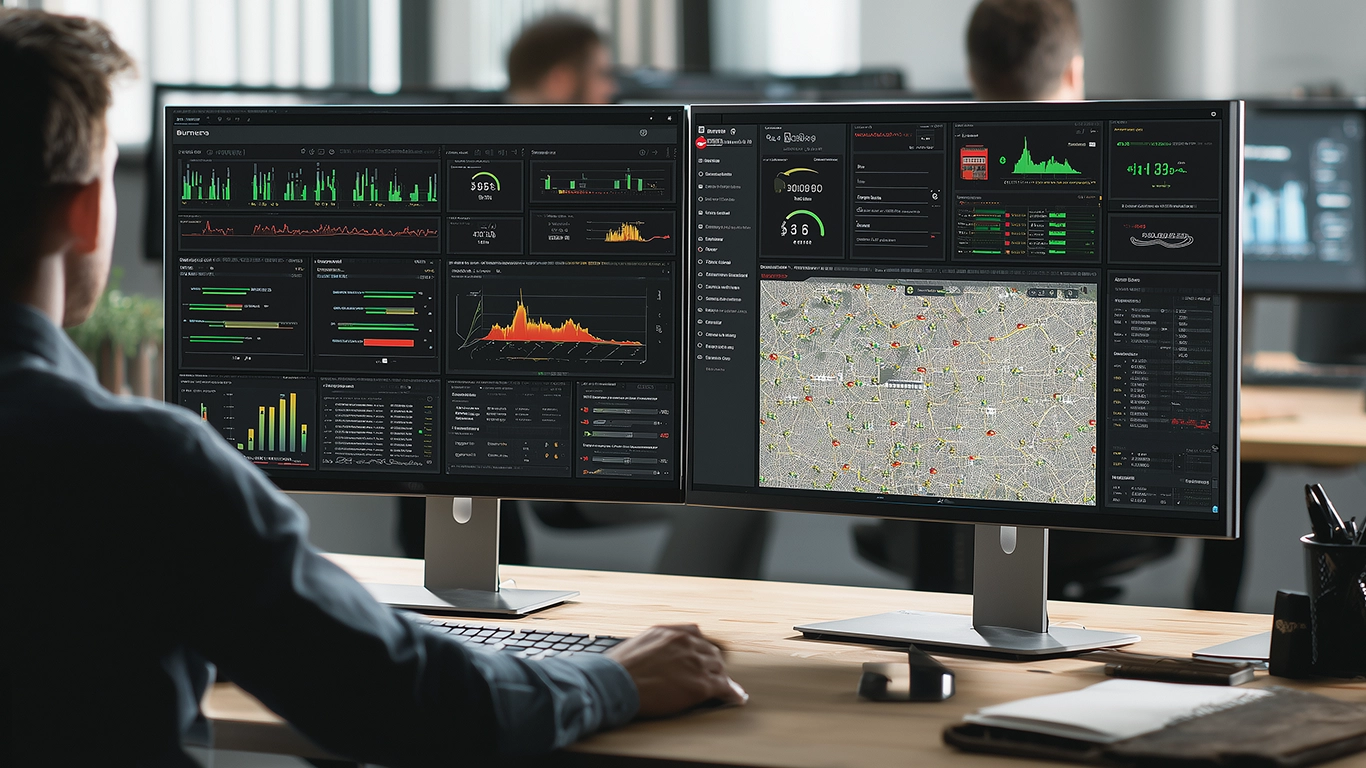
Traditional Monitoring vs. Network Observability
For many years, monitoring tools allowed organizations to answer basic questions such as: “Is the link up?” or “Is the device online?”
Modern network observability goes far beyond that. It provides real-time insights into how each business process is performing, why specific events occur, and how they impact the services the organization delivers—before users or customers notice any disruption.
A mature and effective observability strategy should provide:
-
Performance metrics (jitter, latency, packet loss)
-
Dependencies across on‑premise, cloud, and multicloud services
-
Network traffic and data flows
-
Device and application telemetry
This information delivers not only technical visibility, but also business context—essential for executive-level decision-making.
The True Value of Observability for Business Continuity
For CEOs, COOs, and executive committee members, the real value of observability lies not in technical details, but in its impact on customer experience, internal user productivity, SLA and contract compliance, operational risk reduction, availability of critical services, revenue protection, and corporate reputation.
A network failure can mean far more than an IT issue. It may result in regulatory non-compliance, data loss, revenue impact on digital platforms, supply chain disruptions, or reputational damage that is difficult to reverse.
A strong observability strategy allows organizations to anticipate potential failures, identify degradation patterns, and make informed decisions—significantly reducing the likelihood that an incident becomes business-critical.

Viewing the Network as a Digital Ecosystem
Modern enterprise networks are complex and represent a major challenge for business continuity. Many U.S. organizations operate traditional data centers alongside hybrid and multicloud environments, remote access solutions, distributed workforces, mission-critical SaaS applications, and global interconnections based on BGP.
Maintaining a fragmented view of the network increases the risk of hidden failures. Network observability acts as a unifying layer, helping organizations understand how each component impacts the broader digital ecosystem.
The Role of Artificial Intelligence in Network Observability
In 2026, it is impossible to discuss technology without addressing artificial intelligence (AI). AI has significantly enhanced observability platforms by enabling real-time analysis of massive data volumes, correlating events across networks, applications, and cloud services.
AI can detect anomalies and behavioral patterns that may not be obvious to human operators and can predict potential failures before they occur. However, human oversight remains essential—AI supports decision-making but does not replace executive judgment.

Executive Decision-Making: Before and After Observability
Many executives still do not view observability as a critical input for strategic decision-making. However, adopting observability can represent a turning point in how organizations evolve their processes and ensure long-term continuity.
With actionable data, leadership teams can assess risks before international expansion, understand the real impact of cloud migrations, prioritize technology investments based on evidence, optimize operational costs without sacrificing performance, and plan mergers or system integrations with greater confidence.
Through observability, the network becomes a source of business intelligence—not a cost center, but a strategic investment.
Strategy, Expertise, and Guidance as Competitive Advantages
Implementing observability requires more than acquiring advanced tools. It demands a strategic vision aligned with business objectives and a properly designed network architecture.
Complex enterprise environments require proven experience in real-world deployments. While observability is a powerful strategy, its success depends on deep expertise, a holistic perspective, and the ability to adapt to each organization’s unique context.
At JT TECH Global, we understand that every technical decision has a direct business impact. We partner with organizations to implement observability strategies grounded in business context, executive objectives, and long-term vision—allowing leadership teams to focus on growth and innovation.

Conclusion: Observability as a Strategic Advantage
Network observability is no longer a purely technical option—it is a strategic imperative. In an environment where digital experience and operational continuity are critical, comprehensive visibility across the digital ecosystem enables organizations to anticipate challenges, respond effectively, and lead with confidence.
Investing in observability means investing in control, resilience, and a future-ready business.
By JT Tech
IT Solutions – WiFi
Related Resources

Transforming Sports & Public Venues: Connectivity to Actionable Insights
When attending a game or event, guests expect a fast and stable mobile experience. This baseline goal has grown and evolved substantially, as more customer-facing and back-of-house assets are digitized in venue environments, relying on critical IT network solutions...

ArcelorMittal Improves IT Performance and Reliability Across Three European Corporate Hubs
ArcelorMittal is the world's leading steel and mining company with a presence in 60 countries and an industrial footprint in 19 countries worldwide. It employs over 4,000 staff, 800 of whom are based in its head office in Luxembourg. It employs over 4,000 staff, 800...

MSK Group is Ready for Tomorrow With Modernized Network
MSK Group is a family-owned business based in Ylihärmä, Finland. For more than 70 years, it has been manufacturing high-quality plastic components, mobile machinery, and smart cabins for a range of industries, including construction, mining, agriculture, forestry, and...

Digital Transformation Efforts Powered by Network Automation, Simplicity, Security, and Intelligence
ŠKODA AUTO, based in Mladá Boleslav, is a leading industrial enterprise in the Czech Republic and one of the oldest carmakers in the world. Today, ŠKODA AUTO employs over 30,000 people, operating as part of the Volkswagen Group for nearly 30 years. In recent years,...

Streamlining the Kraft Group’s Manufacturing Operations
The Kraft Group is a privately held holding company headquartered in Massachusetts. It is the holding company for several subsidiaries operating in various sectors, including manufacturing and sports. Extreme Networks has partnered with the Kraft Group for over a...

Extreme Networks meets Major League Baseball™ at the intersection of Cloud, Mobility, and Analytics.
From the concourse to the dugouts and beyond — Extreme Networks is coming to a ballpark near you.CLOUD-SPEED Baseball and technology require agilityand flexibility without losing functionality. MOBILITY Mobile and IoT Devices are integral toplayer and fan experience....

Seattle Seahawks Achieve Operational Freedom with Cloud-Managed Wi-Fi
Lumen Field is a world-class football/soccer stadium and exhibition center, home to the Seattle Seahawks. The 325,000 sq. ft. complex seats 70,000+ and hosts a wide variety and volume of events each year from trade shows, corporate events, concerts, and more, making...

MLB All-Star Week Drives Record Wi-Fi Fan Engagement
MORRISVILLE, N.C.--(BUSINESS WIRE)--Jul. 18, 2023-- Extreme Networks™, Inc .(Nasdaq: EXTR), a leader in cloud networking, today announced that the recent MLB All-Star Week in Seattle, which ran fully on Extreme wireless solutions, drove record fan Wi-Fi engagement...

Baylor Outfits New Stadium with Professional Grade Wi-Fi for an Interactive Fan Experience
McLane Stadium is the home football stadium of Baylor University, a private higher education institution located in Waco, Texas. Devoted to delivering an exceptional gameday experience to its fans, in the fall of 2012 Baylor University embarked on a $260 million...

Always On” High-Density Wi-Fi and Analytics for Stadiums and Arenas
Fans everywhere want to share their sports experience and excitement with other fans in the stadium, their friends and family at home, and their social networks, providing reliable, wireless internet access was crucial to delivering a world-class fan...